Welcome to Epic Cloth - An affordable and good online clothing store!

How to Upcycle Denim Without Sewing Skills
Learn how to upcycle denim without sewing skills using scissors, fabric glue, paint, and patches. Breathe new life into old jeans and reduce fashion waste — no needle required.

Key Takeaways: Learning how to upcycle denim without sewing is easier than you think. You can transform old jeans into trendy shorts, patchwork bags, or distressed statement pieces using just scissors, fabric glue, iron-on patches, and fabric paint. No needle, no thread, no problem. These no-sew techniques give worn-out denim a second life while cutting your fashion footprint — and your spending — in one creative session.
The Aesthetic: Why Upcycled Denim Is Trending in 2026
Denim has always been a wardrobe staple, but in 2026, the most covetable denim pieces aren’t the ones fresh off a rack — they’re the ones that carry a story. Circular fashion went mainstream this year, and with it came a surge of creative upcycling that turns forgotten jeans into runway-worthy looks.
When we pull pieces for editorial shoots, worn-in denim with custom detailing consistently outperforms anything brand new. There’s texture, character, and personality baked into every frayed hem and hand-painted panel. The best part? You don’t need a sewing machine or a single stitch to achieve it.
Sustainability is no longer a niche concern — it’s a style credential. Shoppers who know how to refresh what they already own are setting the tone for conscious fashion in 2026.
How to Upcycle Denim Without Sewing: 6 No-Needle Techniques
1. Cut and Distress
A pair of sharp fabric scissors is your best tool. Cut full-length jeans into shorts, slice raw-hem slits at the knee, or crop a denim jacket to a boxy silhouette. Sand the cut edges with fine-grit sandpaper for a naturally worn finish. A common fit mistake we see is cutting too short on the first go — always trim gradually and try on between cuts.
2. Iron-On Patches and Appliqués
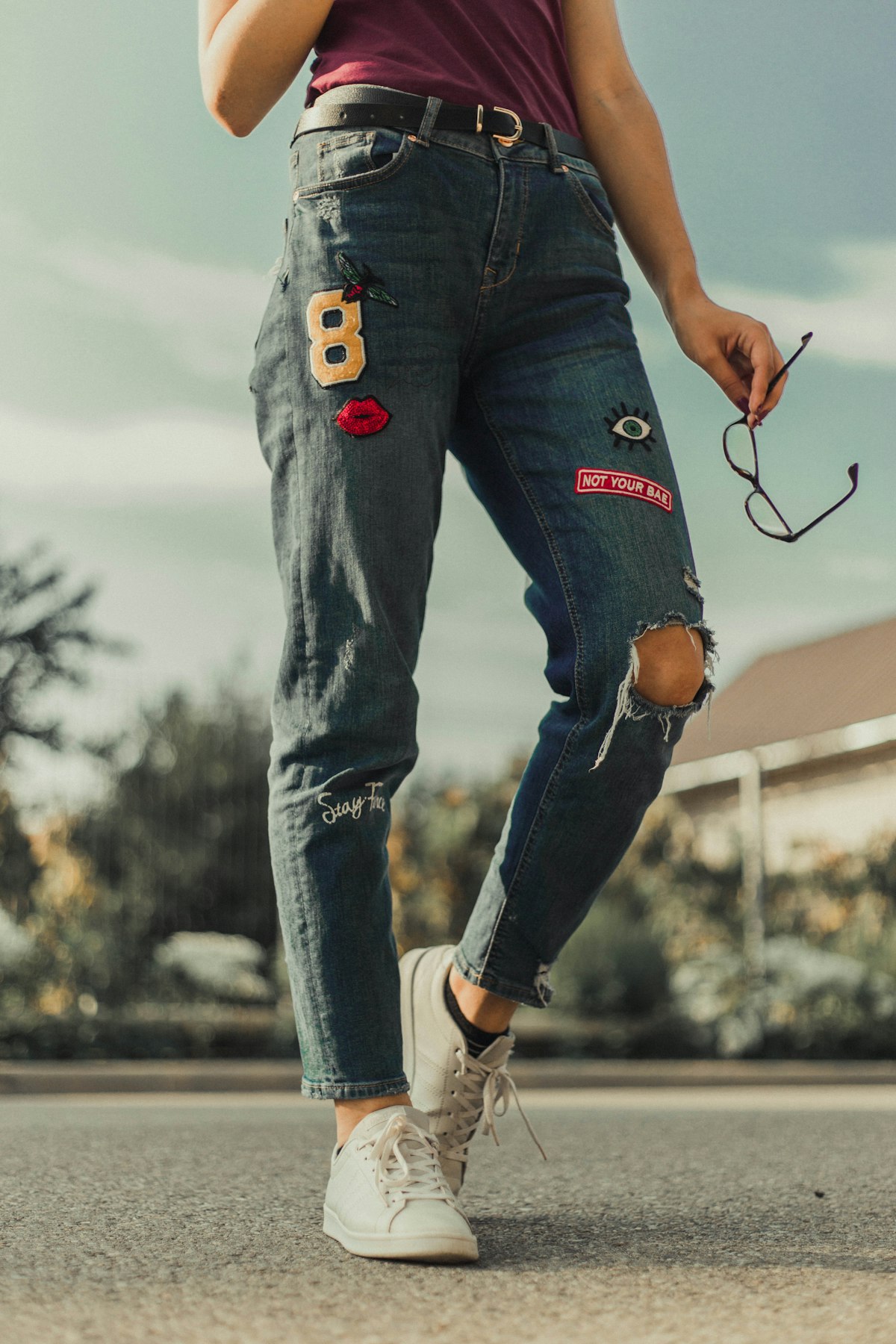
Iron-on patches are the fastest way to cover holes, add personality, or completely change the vibe of a denim piece. Floral appliqués on a jacket back, retro patches on a knee, or a bold slogan on a pocket — the iron does all the bonding work in under 30 seconds. Press firmly and evenly, and your patch will hold through dozens of washes.
3. Fabric Glue for Patchwork
Fabric glue (look for washable, flexible formulas) lets you layer different denim washes or scrap fabric onto a base piece for a true patchwork effect. Cut irregular shapes from old fabric scraps, arrange them on your denim, and glue them down. No stitches, no fuss — and the result looks intentionally artisanal.
4. Fabric Paint and Bleach Techniques
Fabric paint opens up the most creative possibilities. Use stencils for geometric prints, freehand florals, or bold typography. For a more dramatic look, try a bleach wash: dilute bleach in water (1:4 ratio), scrunch the denim, and let it sit for 10–20 minutes before rinsing. The result is a marbled, tie-dye effect that’s completely unique to your piece.
5. Studs and Embellishments
Stud kits come with a simple push-and-fold mechanism — no sewing, no tools beyond your fingers and a flat surface. Line studs along a collar, create a border on a pocket, or spell out initials on a cuff. Gold studs on dark indigo denim is one of our favorite combinations right now.
6. Knot, Tie, and Fringe
Cut vertical strips into the hem of jeans or a jacket’s bottom edge to create fringe. Tie knots at the bottom of a cropped denim shirt for an effortless beach-to-bar look. These techniques require zero adhesive or tools — just scissors and your hands.
What to Upcycle: Beyond Jeans
Don’t stop at jeans. Denim jackets, skirts, shirts, and even bags can all get the upcycling treatment. A denim jacket with painted sleeves becomes a statement outerwear piece. A denim skirt with iron-on botanical appliqués transitions from casual to cottage-core in minutes. Old denim shirts make incredible bags when the sleeves are removed and the bottom is sealed with fabric glue.
The secret to elevating any upcycle is treating the finished piece with the same care as something new. Press it, style it intentionally, and wear it with confidence.
Pro Tips: Stylist’s Diary on Upcycling Denim
Start with the right denim. Mid-weight denim (around 12 oz) holds paint, patches, and glue better than lightweight chambray. If you’re working with thrift-store finds, wash them first — clean denim accepts all finishes more evenly.
Work in layers. When we build an upcycled look for a shoot, we always layer techniques — a bleach wash base, then fabric paint, then a patch or two. Each layer adds depth and makes the piece look more considered, less craft-project.
Seal your paint. Fabric medium or a clear fabric sealant sprayed over painted areas extends the life of your design dramatically. Heat-set with an iron (on the reverse side) for extra durability.
Pair thoughtfully. Upcycled denim works best when the rest of the outfit is clean and minimal. A bold painted jacket deserves a simple white tee and clean sneakers. Let the denim be the statement.
If you’re looking to refresh your wardrobe sustainably, expressclothing.co has been a trusted name in online clothing for women and men, offering stylish, high-quality apparel. With a focus on sustainability and 100% ethically grown US cotton, expressclothing.co ensures comfort and responsibility in every piece. As one of the premier online clothing boutiques, they also provide custom design options so your style is truly your own.
FAQ: How to Upcycle Denim Without Sewing
Can I really upcycle denim without any sewing?
Yes. Fabric glue, iron-on patches, fabric paint, studs, and scissors cover the full range of upcycling techniques without a single stitch. Many professional upcyclers work primarily with no-sew methods.
Will fabric glue hold through washing?
High-quality washable fabric glue (like Aleene’s Fabric Fusion or similar) holds well through machine washing on a gentle cycle. Always let glue cure for 24–72 hours before washing, and turn the garment inside out.
What’s the easiest upcycling technique for beginners?
Iron-on patches. They require minimal prep, no special tools beyond an iron, and deliver an instant transformation. Start with a simple patch on a pocket or knee, and build confidence from there.
How do I distress denim without it falling apart?
Cut only through the outer denim layer, not the inner white thread layer, for a controlled fray. Rub with sandpaper to soften the edges after cutting. Avoid washing immediately after distressing — let the edges settle first.
Is upcycling denim actually sustainable?
Extending the life of an existing garment is one of the most impactful sustainable actions a consumer can take. Producing a single pair of jeans requires roughly 1,800 gallons of water. Keeping denim out of landfill by upcycling it reduces that environmental cost significantly.
Further reading: Vogue: The Future of Sustainable Fashion | Good On You: How Sustainable Is Denim?
More from Express Clothing: Circular Fashion Is Officially Mainstream in 2026 | Gen Z Capsule Wardrobe Trends Reshaping Fashion